Handguns have been around since the 15th century and choosing one to suit you and your needs can be an incredible feat.
This detailed review should help though! We go through the top nine 10MM handguns that have quickly become our favorites. There’s a gun in here for everyone; from professional carriers to beginner gun purchasers.
Let’s lock and load!

Best Overall
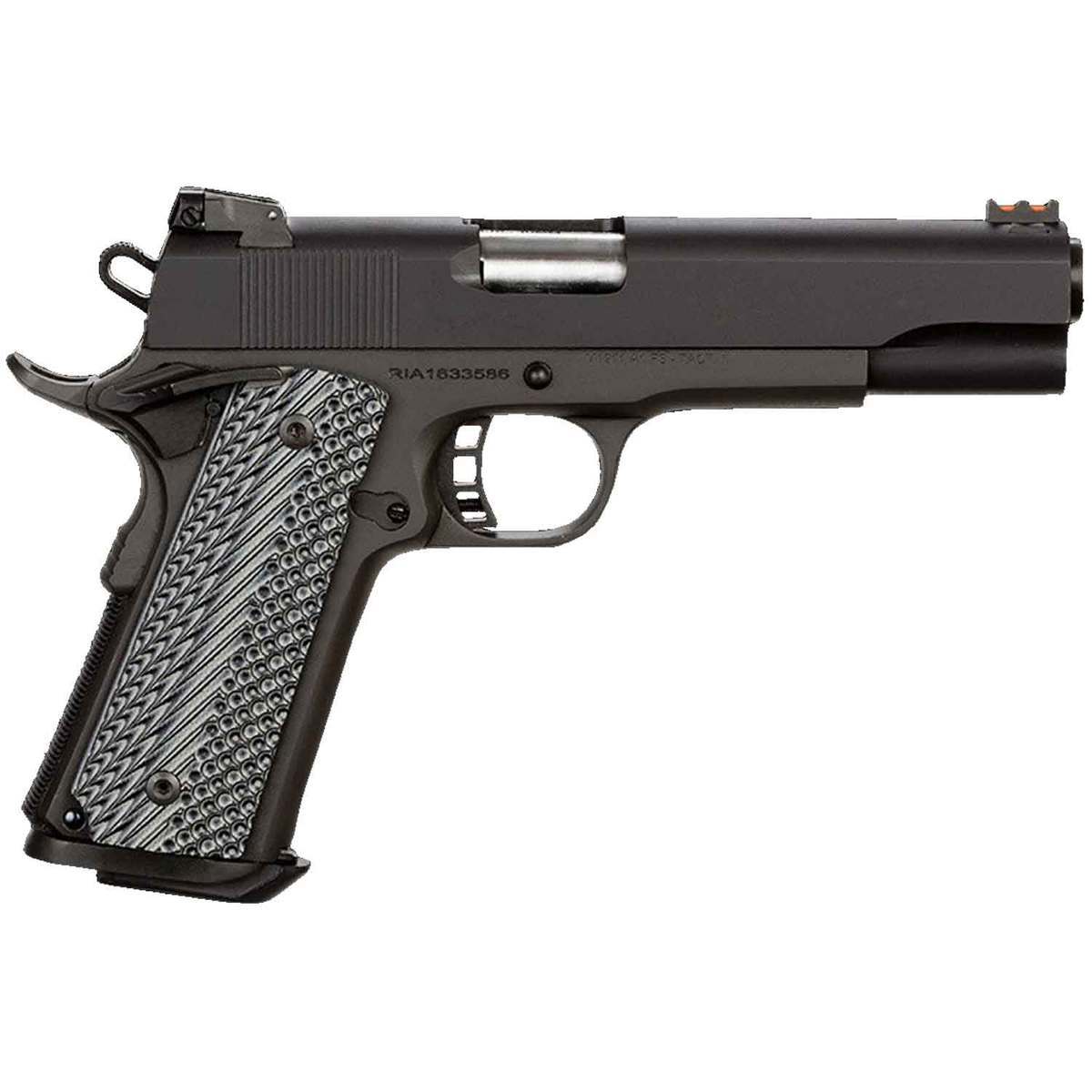
Rock Island Rock Ultra
A gun with the word rock repeated twice in its name should already tell you everything you need to know. The Rock Island’s Rock Ultra model is the overall ideal 10MM gun in our opinion.
To start off, you may notice the incredibly detailed design. Most guns look cool, we know, but the Rock Ultra comes with a side pattern that makes it pretty badass. The flawless craftsmanship, as well as the flashy design, contribute to its title as the best 10MM.
Next, you’ll note the steel frame, the 5″ wide barrel, and the magazine capacity of eight rounds. Those features, in addition to a snag-free hold and a light six pounds trigger, make for a comfortable and control-focused shooting experience.
Another advantage to the Rock Ultra gun is the fiberglass and water-resistant G10 tactical grip. While this allows the gun to be battle-ready, this semi-auto grip can be quite hard for beginner hunters to get the hang of at first.
Additionally, this Rock Island model has a heavy, sturdy feel, which again, might be difficult to get used to if you’re just starting with guns. The gun makes up for this though, by its light weight of roughly three pounds and its safety grip.
Pros
- Stands out by its ambidextrous handle suitable for all hunting styles
- Features both a rear sight and an optic front one
- A wide magazine opening for easy reload
Cons
- It may not be the best option for beginner hunters
- Ideal for more tactical situations and not self-defense, for instance
Best Value
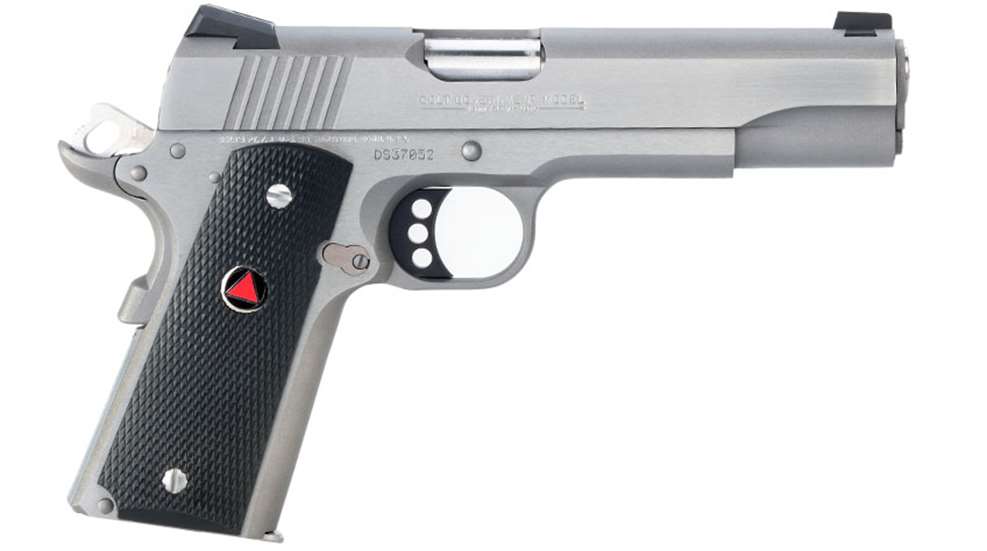
Colt Delta Elite
There’s no talking about handguns without mentioning the government’s go-to brand for such products: The Colt. The impressive Colt 1911 and Colt Delta Elite are just a few fan favorites to mention.
Colt handguns have been around since the late eighties and have since been a widely used choice due to their powerful pull. They’re classy yet sturdy, owing to their sleek design and the double-recoil shooting system—similar to what the following Glock 20 (G20) has.
The gun’s beavertail grip is yet another advantage that makes this Colt model a top choice of ours. This small tweak in design allows the gun to have less bite upon firing and protects your shooting hand as well. A beavertail grip hardens your hold on the gun too.
That said, probably the biggest downside of the Colt Delta Elite is how expensive it is when compared to other models here, including the G20 or the Rock Ultra. However, we think its durability and class is worth every dollar.
Additionally, in case you’ve seen the movies, you’ll already know that the Colt is made for specific purposes. Its Novak sights with white dots feature, for instance, renders the gun better suited for close combat and hunting medium-size game.
Pros
- Single action handgun only making it beginner-safe
- Rear serrations to aid in quick reloading
- Has two magazines that fire eight rounds each
Cons
- An expensive model but offers the best value
- Limited purpose and versatility
Best for Budget
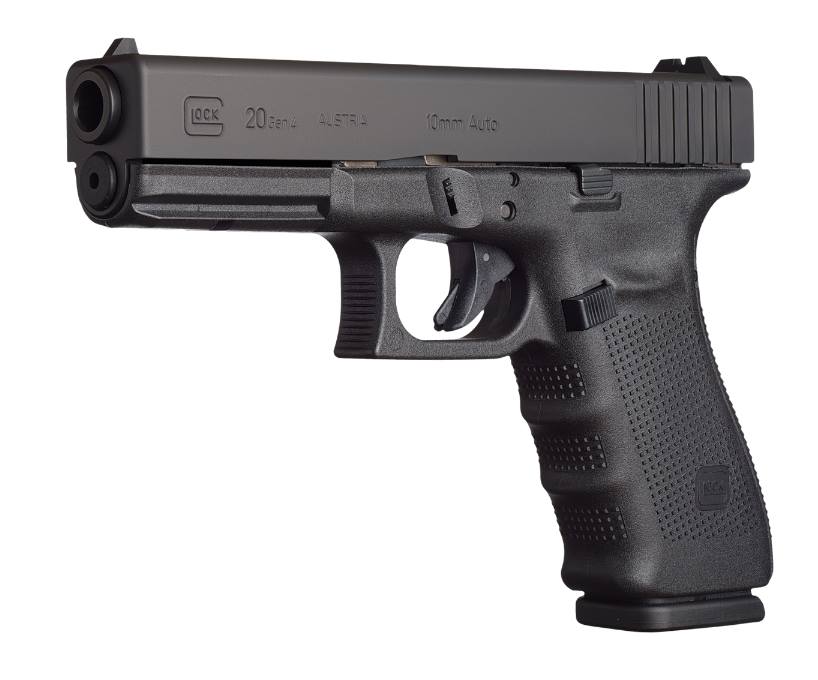
Glock 20 Gen 4
Nothing beats a Glock, which is one of the most popular handguns in America. The Glock 20, especially, has been around for way longer than most of the guns mentioned in our review—or at least is deemed the most popular one among American homes.
Take the G20’s durable yet lightweight design, for example. It’s easy to handle due to its polymer-based frame, unlike the Rock Ultra model that’s made from resin and steel. Not only that, but the G20 features a dual recoil spring that gives the gun more power upon firing it.
On top of that, the Glock’s trigger is 0.5 pounds lighter than the Rock Ultra’s product and has an impressive 15-round magazine. These characteristics rendered the G20 an incredible gun for bear hunters and the go-to gun for home defense as well.
As much as the G20 is comfortable and rather easy to shoot with one-handed, the gun itself is too bulky—especially the 10MM model. This Glock has a wider grip handle which may take some getting used to and can prove a challenge if your hands are small.
Compared to the Rock Ultra which has both front and rear sights, the G20 unfortunately only has fixed iron sights. This feature makes it particularly difficult to see clearly and operate the gun properly when needed.
Pros
- Guaranteed accuracy due to the 4.6″ cold hammer-forged barrel
- Customizable grip with accessories widely available on the market
- Inexpensive and the matte, black nitride finish protects the gun from corrosion
Cons
- The wide grip and bulky design can be hard on beginners at first
- The fixed iron sights may affect your chances of a clean shot

Best for Professionals
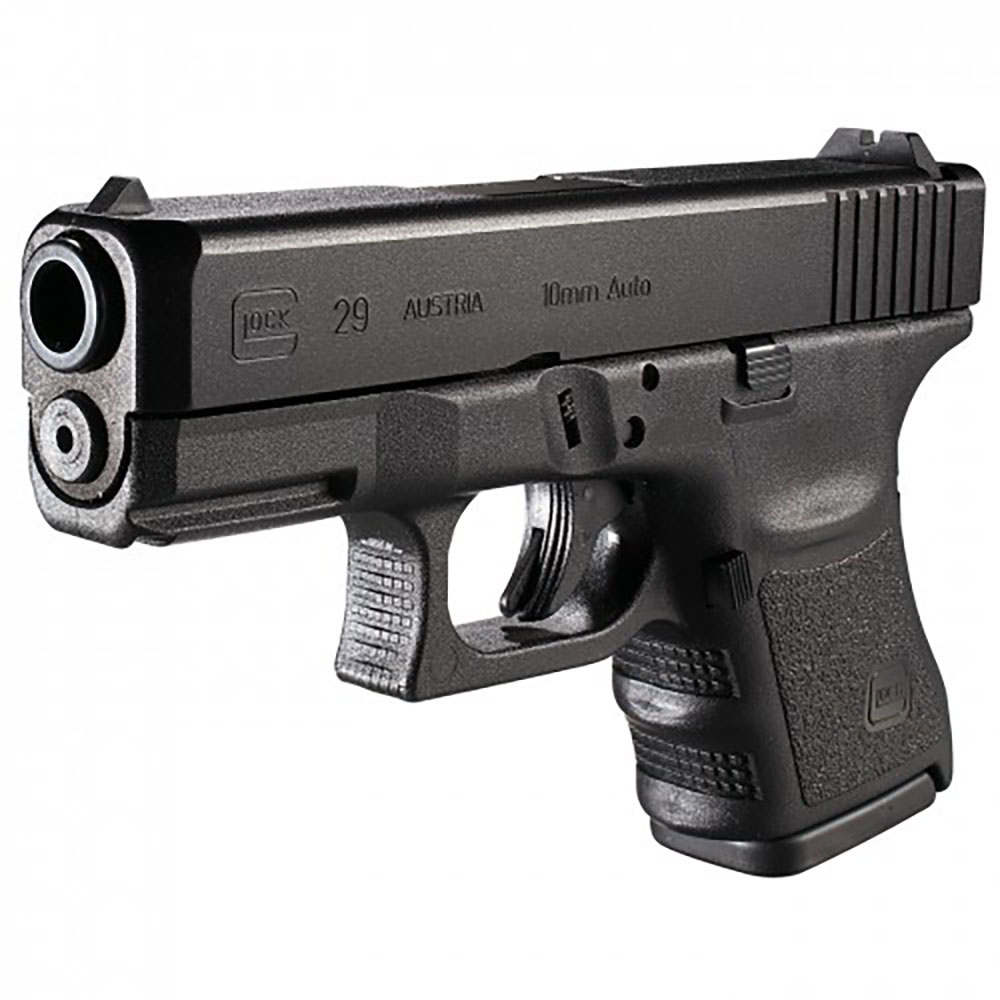
Glock 29 SF
Another Glock? Absolutely! And can you blame us? Glocks are widely popular for a reason and we have two Glock models listed here to celebrate that. Take the Glock 29, for instance. While not differing much from its counterpart, the G20, it’s the better option for professional gun users.
For starters, the Glock 29 is our top pick for a subcompact gun that’s both semi-automatic and easy to conceal. Plus, did you know that the G29 is used by law enforcement officers since it’s pretty light to carry around all day even when fully loaded?
Not only that, but the G29, unlike the G20, is available both in Generation four (G4) and Slight Frame (SF). Add to that, the Glock is shorter than the G20 and a bit bulkier, but still performs and endures the same.
A notable difference between the G20 and G29 is that the latter has fewer rounds. The G29 comes with only 10 rounds as opposed to 15. Its grip can be shorter for some as well, which can affect the shooter’s control and accuracy, in turn.
Since the Glock 29 is incredibly lightweight (less than two pounds even), this means that the gun has a strong force of recoil. It’s also why this Glock is reserved mostly for professionals who know how to keep their hands steady when firing.
Pros
- Another affordable Glock option that’s just as good
- Perfect for concealed carrying and combat
- A small yet reliable subcompact gun
Cons
- Better suited for professional use and veterans
- The short and heavy grip can cause control issue
Best for Beginners
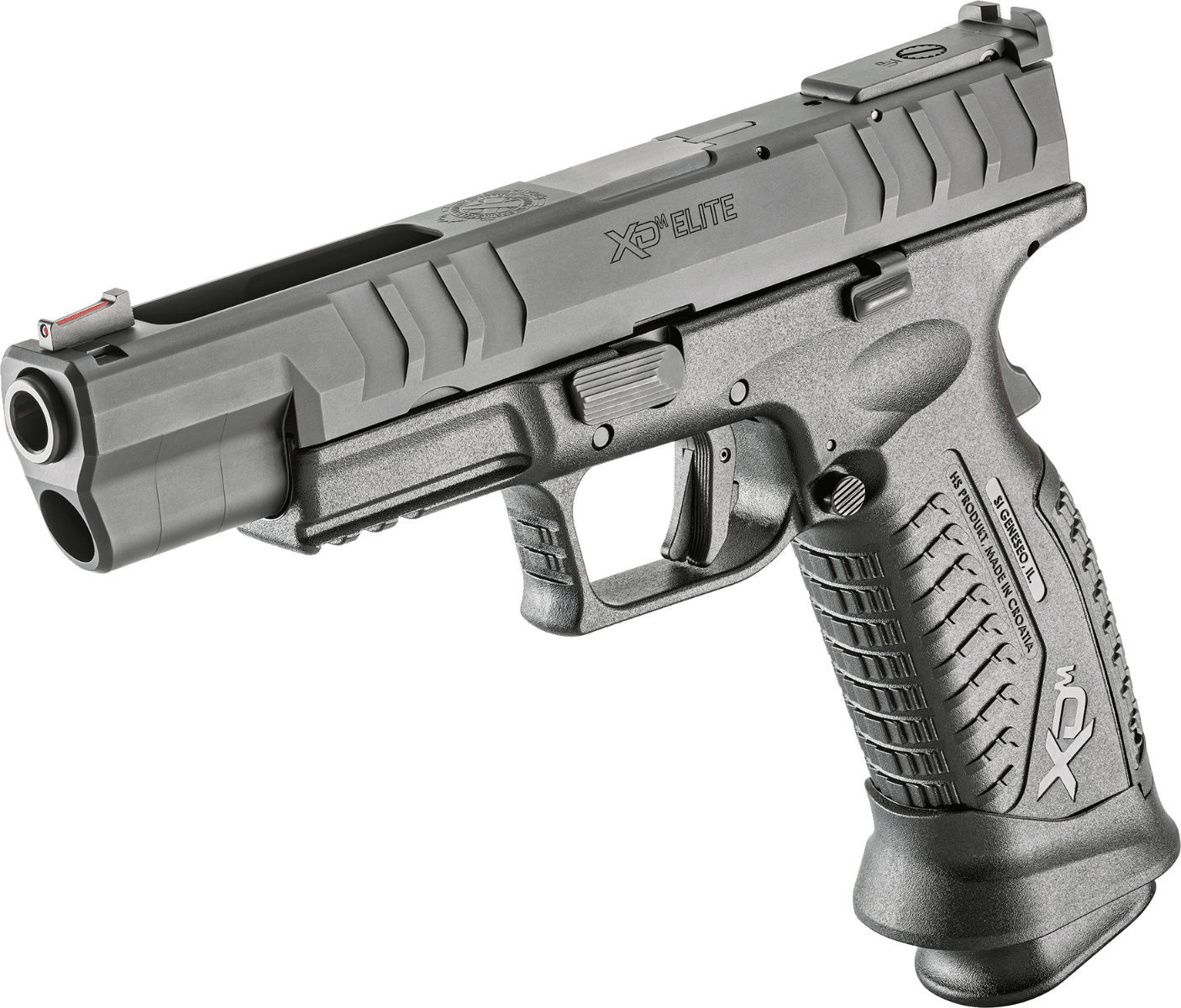
Springfield Armory XD-M Elite
Springfield Armory has rather blessed us, gun enthusiasts, with the XD-M line. If you’ve stuck around since the beginning, you already know a few of their XD-M products have been discontinued. Their Springfield Armory XD-M Elite is still kicking, though!
To begin with, both the XD-M Elite and the Rock Ultra share the ambidextrous grip feature as well as the stylish, Melonite finish. What does make the XD-M Elite unique from the rest though, is its META trigger system that helps beginners perfect their aim and control.
Additionally, this XD-M model has a 3.8″ hammer-forged barrel that’s similar to the Glock 20—which is yet another beginner-friendly 10MM handgun. Springfield’s large grips also help start-up hunters gradually get used to recoil.
While the XD-M Elite is a great gun for newcomers to the shooting world, some of its features may be too tactical for them at first. For instance, it might take time to grow accustomed to its slide serrations and fiber optics.
On top of that, unlike the other reviewed models so far, the XD-M Elite comes with an impressive 20-round magazine. That many bullets might reduce the need to reload too often but it’ll also affect how fast the novice shooter learns to handle a handgun.
Pros
- Easy for beginners to learn control and accuracy
- Can be upgraded to fit other professional wants if needed
- Features the unique Match Enhanced Trigger Assembly (META) system
Cons
- A bit on the expensive side compared to the G20
- Can be too tactical for some new gunners at first
Best for Regular Hunters
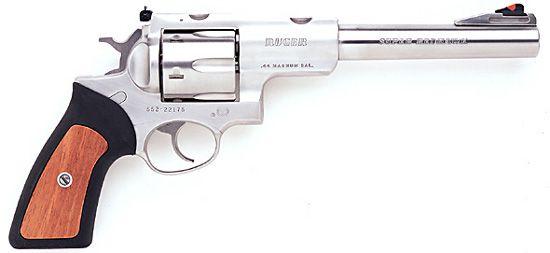
Ruger Super Redhawk
Revolver guns don’t usually accommodate 10MM cartridges, but that just proves how special the Ruger Super Redhawk revolver is. The design alone is enough to make any hunter fall in love; mainly because it mixes the traditional look of a revolver with a glossy stainless finish.
The first feature you’ll notice with the Ruger revolver is its weight. The gun will be heavy in your hand. Since this helps with control and handling, a regular hunter will certainly appreciate it. Not just that, but the Super Redhawk model supports multiple upgrades if necessary.
In other words, feel free to install as many optics, including scopes and sights, to aid further in your hunting game. The long barrel is yet another element that makes the Ruger more unique than Glocks, for instance. This factor helps shooters maintain the gun’s balance as well.
That said, revolvers with pistol cartridges (10MM) can be tricky to get used to as revolvers aren’t made to use them. While it may reduce your reloading speed significantly, it’ll take getting used to. This typically leads to hunters resorting to normal revolvers rather than semi-auto pistols.
To top that off, the Ruger Super Redhawk is a double-action revolver. Some frequent hunters don’t necessarily like this feature and prefer single-action weapons instead. Of course, you can take it upon yourself to alter the Redhawk revolver, but the effort is rather extensive and might damage it.
Pros
- Couples between the benefits of a standard revolver and a regular pistol
- Features a crowned muzzle that helps protect the gun from long-term damage
- Designed with rubber-based, over-molded grips that reduce recoil significantly
Cons
- A significant capacity difference from other 10MM handguns mentioned
- Limited to hunting games alone as it’s too powerful for self-defense

Best for Self-Defense
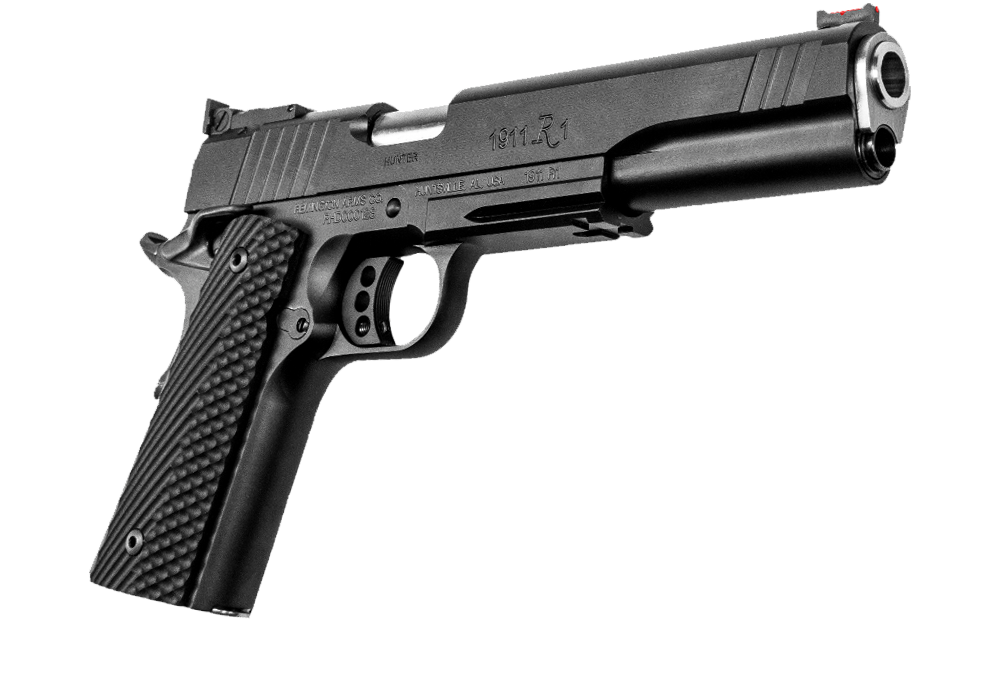
Remington R1 Hunter M1911
Boasting phenomenal accuracy and awesome stopping power, the Remington R1 Hunter 1911 10mm is an impressive semi-automatic pistol beloved by gun connoisseurs and hunters. It’s chambered in the ultra-powerful 10mm cartridge, allowing shooters to hit even distant targets with unwavering precision.
The R1 Hunter offers an impressive 6-inch match-grade barrel, adjustable rear sights, and a prominent fiber optic front sight for precise sighting. To top it off, the gun is outfitted with a custom VZ G10 grip that provides maximum stability while you shoot. With these features in your arsenal, logging accurate shots will be easier than ever.
The gun is finished with a black PVD coating that not only looks great but also helps protect against wear and corrosion.
Overall, the Remington R1 Hunter 1911 10mm is an ideal option for any individual seeking a dependable and high-grade firearm to be used in multiple scenarios – from hunting to defending oneself.
Pros
- Powerful and reliable
- Semi-automatic with 10mm cartridge
- Match-grade barrel for accuracy
- Adjustable sights for easy targeting
- Fiber-optic front sight for improved visibility
- Custom grip for a secure and comfortable hold
- PVD coating for protection against wear and corrosion.
Cons
- Higher recoil due to 10mm cartridge
- Heavier weight due to larger size
- May not be legal in some states/countries due to size/caliber restrictions
- Higher cost compared to other handguns
Features to Consider When Buying a 10MM Pistol
Before you go on saving for that new firearm, let’s first go through a couple of factors you need to keep in mind beforehand.
Below, you’ll find five features that are incredibly important and need to be taken into account when purchasing a 10MM handgun.
Safety of the Gun
First things first, your safety matters the most when it comes to using guns. You need to be aware of how to operate your 10MM handgun safely before purchasing one. You also should learn where the safety triggers are and how you can use them correctly.
On top of that, it’s important to note how many rounds your 10MM gun can carry at a time so you can keep track while on the field. It’s just as good to know how to properly load and reload your pistol too.
Knowing the above and consciously applying these safety rules will reduce the chances of accidental firing or injury due to a firearm incident. In other words, with the proper precautions, you can practice firing safely.
It’s also a must that you know the gun laws of your country and or city. It’s better to stay on the legal side when it comes to purchasing, owning, and using a gun.
Stopping Power (Caliber)
Ballistics and stopping power are debatable topics in shooting circles because we all care about the advantages a strong bullet can give us. The bigger the force of a handgun is, the larger the pistol’s caliber typically is.
10MM guns are rather powerful due to their wide caliber and so their bullets deal bigger damage upon firing. Not only that, but these handguns usually have a stronger recoil that may take some time to get used to as well.
Finally, even the 10MM’s muzzle energy and bullet velocity are relatively high when compared to others, such as the 9MM or the .45 ACP, for instance. As such, the 10MM caliber makes it the most suitable for hunting purposes and range shooting.
Number of Rounds and Powder Weight
The number of rounds a 10MM caliber can hold will obviously differ from one handgun to another—as you may have gathered from the above reviews. The least amount of bullet rounds a pistol could have is ten.
However, the average number of rounds a 10MM handgun can handle is anywhere from ten to 15. How many bullets you may need will certainly depend on your purpose and how often you’ll be firing the gun in the first place.
Some 10MM pistols, such as the Colt Delta Elite, come with an impressive 20-bullet round and two magazines. With that number of bullets, you can quickly learn how to practice your accuracy, aim, and control quickly.
Another feature you need to look out for is the bullet’s powder weight. Naturally, there’s a wide variety, but 180 grains are what’s recommended typically for 10MM handguns. The grain weight is essential because it directly affects trajectory, recoil, and impact.
Purpose and Use
The great thing about 10MM handguns is that they can be fired for multiple uses. To put it simply, regardless of what you’ll be using it for, a 10MM pistol will certainly serve your goal. That said, though, you should determine beforehand what your purpose is before getting a gun.
The gun you use for hunting, for instance, can’t necessarily be the same as the one you get for self-defense and home security. Alternatively, some pistols are more tactical than others which makes them better suited for professionals than beginner gun users.
If you are interested in target shooting, check out some of the best beginner competition pistols on the market.
Price Range
The price of the handgun you have your eye on may not be as important as the other factors we mentioned, but it’s just as essential to keep in mind as well. You may already know that pistols can be rather expensive, so you might end up needing to save up either way.
Be smart about your budget and work your way up to more costly models that are considered classics in the gun world, such as Colts, for example. Glocks, on the other hand, are always widely available and quite budget-friendly, so we recommend starting with those.
Frequently Asked Questions
Is a 10MM Pistol Worth It?
One of the many debates among gunners includes whether 10MM pistols can be compared to their counterparts; namely the 9MM pistol and the .45 ACP.
We’re here to say that the 10MM is worth it because even though it has fewer rounds than the 9MM, the bullets have more power and force upon fire than 9MMs.
What Is a 10MM Pistol Comparable To?
Since 10MM pistols are known for their undeniable force, they’re often put together with .45 ACP handguns. Their stopping power, or calibers, is about the same as well in terms of power.
Both the 10MM and .45 ACP are popular gun choices for self-defense too. That said, some people compare 10MM pistols to a 41 Magnum.
What’s the Best 10MM Pistol for Hunting?
Many of the 10MM guns we reviewed above are ideal for hunting. To name a few examples, you have the Colt Delta Elite, the Glock 20, and also the Springfield Armory’s XD-M Elite.
Most 10MM pistols are great for hunting either way. That’s mainly because these handguns are rather powerful and have a minimal drop out of 100 yards.
What Is More Powerful: 10MM or .45 Cal?
Speed in guns typically equals more force upon firing. While we did say that the 10MM and .45 have some features in common, the 10MM is arguably more powerful than the .45 ACP.
Not only that, but 10MM handguns can usually carry more rounds than .45 ones. Additionally, 10MM has a faster terminal velocity despite being a heavier bullet than the .45.
Final Thoughts
Our guide’s aim was all about covering the best 10MM handguns available in the market. We hope that before you pick one of our favorites that you keep in mind the five elements we talked about first. They should help you make your decision easier.
That said, however, our first recommendations would be either the G20 or the G29 since either Glock is quite inexpensive and will serve multiple purposes. In case you’re willing to splurge a little, though, we suggest the Colt Delta Elite or the Rock Ultra instead.
Safe lock and loading!